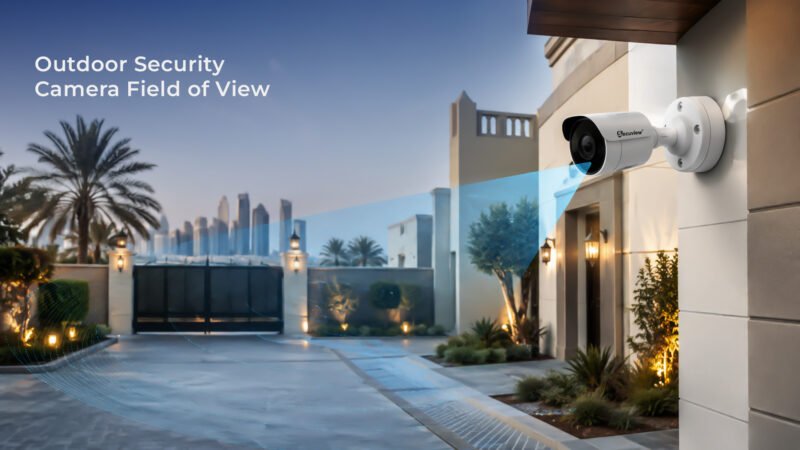
Outdoor Security Camera Field of View: How Wide Should It Be?
The right field of view (FOV) depends on the space, camera distance, lens, and detail you need. A wide-angle security camera can cover a garden or yard, while a narrower lens can give more detail at a distant gate or driveway.
What Is Field of View on a Security Camera?
Field of view describes how much of a scene a camera can capture. It is measured in degrees.
A wide viewing angle, such as 120° to 180°, captures more space from one position. A narrower angle shows less of the scene but can keep people, vehicles, and entry points larger in the frame.
FOV is different from resolution. The lens controls coverage, while resolution affects image detail. A 4K security camera with a very wide lens can still show a distant subject as relatively small.
How Does Security Camera FOV Work?
The lens, focal length, image sensor, and mounting position all affect the final view.
A shorter focal length usually creates a wider image. A longer focal length gives a tighter view and can suit distant areas.
Camera placement matters too. A camera mounted at the corner of a villa may cover two sides of the property. A camera aimed down a long driveway may need a more focused lens.
For the wider relationship between lens choice, viewing distance, resolution, night vision, and placement, see the outdoor surveillance camera selection.
Wide vs. Narrow Field of View
Wide-Angle View: 120° to 180°
A wide FOV can suit:
- Gardens and backyards
- Villa entrances
- Parking spaces
- Open outdoor areas
It can reduce blind spots, but distant subjects may appear smaller.
Narrow View: 45° to 90°
A narrower FOV can work well for:
- Gates
- Long driveways
- Vehicle entrances
- Boundary points
- Specific access areas
A focused view can keep distant targets larger and easier to inspect.
What Determines an Outdoor Camera’s FOV?
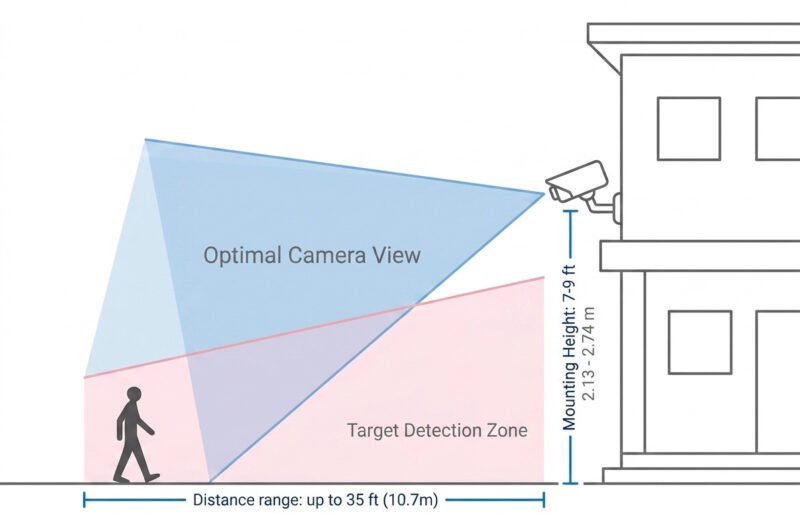
What Determines an Outdoor Camera’s FOV
Focal Length
Focal length directly affects the viewing angle. Short lenses generally provide wider coverage, while longer lenses create a tighter image.
Image Sensor
The image sensor receives light through the lens. Its size and design can affect the resulting view and image quality.
Resolution
Resolution affects how much detail is visible. Higher resolution can help when people or vehicles appear farther away.
Optical Zoom
PTZ and varifocal cameras can change the viewing angle. Optical zoom is useful when you need to focus on a distant area without relying only on digital enlargement.
Camera Position
Mounting height, direction, walls, poles, trees, and nearby structures can change practical coverage. A good lens can still leave blind spots if the camera is poorly positioned.
Lighting and Night Vision
Bright sunlight, shadows, glare, and low-light conditions can affect usable footage. For outdoor monitoring, FOV should be considered alongside infrared night vision, low-light sensors, and available lighting.
Choosing the Right FOV for Different Outdoor Areas
Front Door and Main Entrance
A moderate or wide angle can cover the approach path and entrance. Avoid pointing the lens directly toward strong sunlight because glare can reduce useful detail.
Driveway and Garage
Check the driveway’s length and width before choosing the lens. A very wide lens may show the entire driveway but make a vehicle at the far end appear small.
Gates and Vehicle Entrances
A more focused view can help monitor people and vehicles. If license plates are the main target, an LPR camera may be a better choice than a standard wide-angle model.
Gardens and Yards
A wide-angle outdoor camera can cover a larger open area from one mounting point. Check walls, trees, and other objects that may block the view.
Boundary Walls and Perimeters
Long boundaries often need several cameras. Overlapping views can reduce blind spots while keeping important areas within a useful detection range.
FOV, Resolution, and Night Vision Work Together
The field of view should not be selected by itself. FOV controls how much you see, resolution controls image detail, and night vision supports visibility after dark.
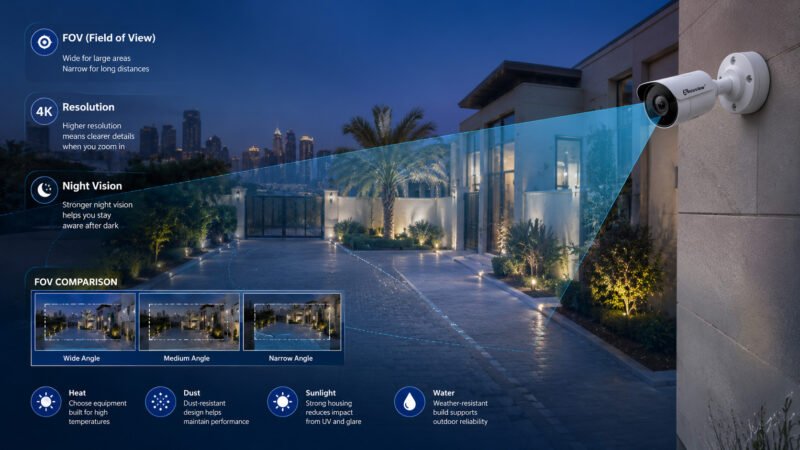
FOV, Resolution, and Night Vision Work Together
For example, a wide-angle 4K camera may suit a villa garden, while a higher focal-length camera may be better for a long driveway. The correct choice depends on the target distance and the detail required.
For Qatar properties, outdoor equipment should also suit heat, dust, sunlight, and water exposure. Your camera selection should match the actual mounting environment.
How to Choose the Right Field of View
Before buying an outdoor surveillance camera, check:
- The area you need to monitor
- Distance to people and vehicles
- Width of the viewing zone
- Required image detail
- Lens focal length
- Resolution
- Night vision performance
- Mounting height and direction
- Possible blind spots
- Whether one or several cameras are needed
A large villa, farm, warehouse, or parking area may need multiple viewpoints instead of one ultra-wide lens.
Keep Reading
These topics connect lens selection with night visibility, environmental protection, installation, and image detail.
FAQs About Outdoor Camera Field of View
What is a good FOV for an outdoor security camera?
A moderate to wide FOV works well for many entrances, gardens, and open areas. A narrower lens is often better for distant gates and long driveways.
Is a 90° field of view enough for a driveway?
It can be enough for a narrow or short driveway. For a long driveway, check the camera distance and the amount of detail needed at the far end.
Is a wider field of view always better?
No. A wider view covers more space, but distant subjects can appear smaller. A narrower view can provide more useful detail at longer distances.
Does resolution change the field of view?
No. Resolution affects image detail, while the lens and focal length mainly determine the viewing angle.
What FOV is best for a villa entrance?
A moderate or wide angle is often suitable when the camera is close to the entrance. The approach path, gate position, walls, and mounting height should guide the final choice.
Can one camera cover an entire property?
Sometimes, but large properties often need several cameras. Multiple viewpoints can improve coverage and reduce blind spots.
Does night vision affect field of view?
Night vision does not normally change the lens angle. However, the useful viewing area after dark depends on the camera’s IR illumination, sensor, lighting, distance, and scene conditions.
Conclusion
The right outdoor camera FOV depends on coverage area, target distance, focal length, resolution, mounting position, and lighting. Wide-angle cameras work well for open spaces, while focused lenses can provide better detail at gates, driveways, and distant targets.
Measure the area first, identify what you need to see, then choose the lens and camera type around those requirements.